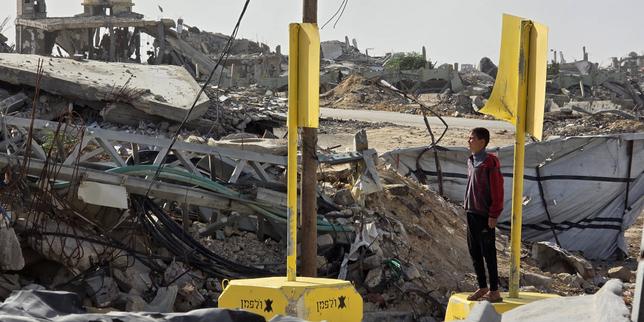
Almeno 10 morti in Libano: autorità riferiscono dopo attacchi israeliani al Hezbollah
Lebanon's public health ministry confirmed that at least 10 civilians were killed in a series of Israeli airstrikes that struck the eastern regions of the country overnight.

Lebanon's public health ministry confirmed that at least 10 civilians were killed in a series of Israeli airstrikes that struck the eastern regions of the country overnight. The attacks, which targeted suspected Hezbollah command centers, marked another escalation in the volatile conflict between Israel and the Lebanese militant group. According to Israeli military statements, the strikes were carried out in response to ongoing threats posed by Hezbollah, which has been actively involved in cross-border operations. The incident occurred amid a fragile ceasefire that was brokered in late 2024 by the United States, a fragile agreement that has been repeatedly tested by sporadic violence. The strikes, which took place in the Baalbek area of the Bekaa Valley, have raised concerns about the potential collapse of the ceasefire and the risk of a broader regional conflict. Health authorities in Lebanon reported that at least 24 people were injured, including three children, though the identities of the deceased remained undisclosed. The attacks have further complicated an already precarious political landscape, with both sides accusing each other of violating the terms of the truce.
The Israeli military's decision to target Hezbollah's infrastructure in the Bekaa Valley has drawn sharp criticism from Lebanese officials, who have condemned the strikes as a violation of national sovereignty. President Joseph Aoun expressed outrage, stating that the attacks "represent a new violation of Lebanon's sovereignty" and called for international intervention to address the escalating tensions. Meanwhile, Hezbollah claimed that eight of its members were among the casualties, highlighting the group's determination to retaliate against Israeli actions. The militant organization has long been a key player in the region, and its leadership has consistently framed its activities as a defense against Israeli aggression. The strikes also coincided with a critical moment in U.S.-Iran relations, as President Donald Trump weighed potential military measures against Iran's nuclear program. If the United States opts for military action, Iran-backed groups like Hezbollah could be forced to retaliate against U.S. forces or allies, potentially expanding the conflict beyond the Middle East. This scenario underscores the precarious balance of power in the region, where a single miscalculation could lead to widespread devastation.
The conflict between Israel and Hezbollah has deep historical roots, with both sides engaging in a cycle of violence that has persisted for decades. The current situation is further complicated by the presence of other militant groups, such as Hamas, which has also been involved in cross-border operations. The Israeli airstrikes in the Bekaa Valley were not isolated incidents; they followed earlier attacks on Ain al-Hilweh, the largest Palestinian refugee camp in southern Lebanon. Israel claimed that the targeted site was used by Hamas as a command center, a claim that has been disputed by Palestinian and Lebanese authorities. Hamas condemned the strikes, asserting that the facility was part of a joint security force responsible for maintaining stability within the camp. This incident highlights the overlapping interests of various militant groups and the difficulty of distinguishing between legitimate security measures and acts of aggression. The ongoing violence has also placed additional pressure on Lebanon's already strained political and economic systems, which have been struggling to recover from years of instability.
The implications of the Israeli strikes extend far beyond the immediate casualties and damage to infrastructure. The attacks risk destabilizing the fragile ceasefire that has been a cornerstone of regional diplomacy, potentially reigniting a full-scale war between Israel and Hezbollah. Analysts warn that the situation could escalate further if either side perceives the other as unwilling to de-escalate. The involvement of external actors, such as the United States and Iran, adds another layer of complexity, as their interventions could either mitigate or exacerbate the conflict. The strikes have also intensified public sentiment on both sides, with Lebanese citizens expressing anger over the loss of life and the perceived threat to their country's sovereignty. Meanwhile, Israeli officials continue to justify their actions as necessary to protect national security and prevent further attacks. The situation is further complicated by the presence of Palestinian refugees in Lebanon, whose communities have become targets of Israeli military operations, raising ethical and humanitarian concerns.
Looking ahead, the prospects for de-escalation remain uncertain. While diplomatic efforts are ongoing, the entrenched positions of both sides suggest that a lasting resolution may be difficult to achieve. The involvement of external powers, particularly the United States and Iran, could either provide a framework for negotiation or deepen the conflict through direct intervention. The international community is closely monitoring the situation, with calls for restraint and adherence to international law growing louder. However, the risk of miscalculation remains high, as both Israel and Hezbollah continue to view each other as existential threats. The strikes in the Bekaa Valley serve as a stark reminder of the volatility of the region and the potential consequences of continued hostilities. As the situation evolves, the focus will likely shift to finding a way to prevent further violence while addressing the underlying grievances that have fueled the conflict for so long. The path forward, however, remains fraught with challenges, and the outcome will depend on the willingness of all parties to engage in meaningful dialogue.
Fonte: The New York Times Articolo originale
Argomenti
Articoli Correlati

Cipro allerta: Macron propone scudo navale europeo per difendere
4 giorni fa
Ucraina accusa Ungheria: 7 impiegati banca presi in ostaggio. Orban: ogni mezzo per scontro su petrolio
4 giorni fa
US e Israel attaccano Iran: Iran avverte guerra prolungata mentre lancia ondate di colpi su Beirut e Teherán
5 giorni fa